Fire stopping explained: what it is and why it matters
What fire stopping is, where it's needed in commercial buildings and why it matters for keeping people safe.
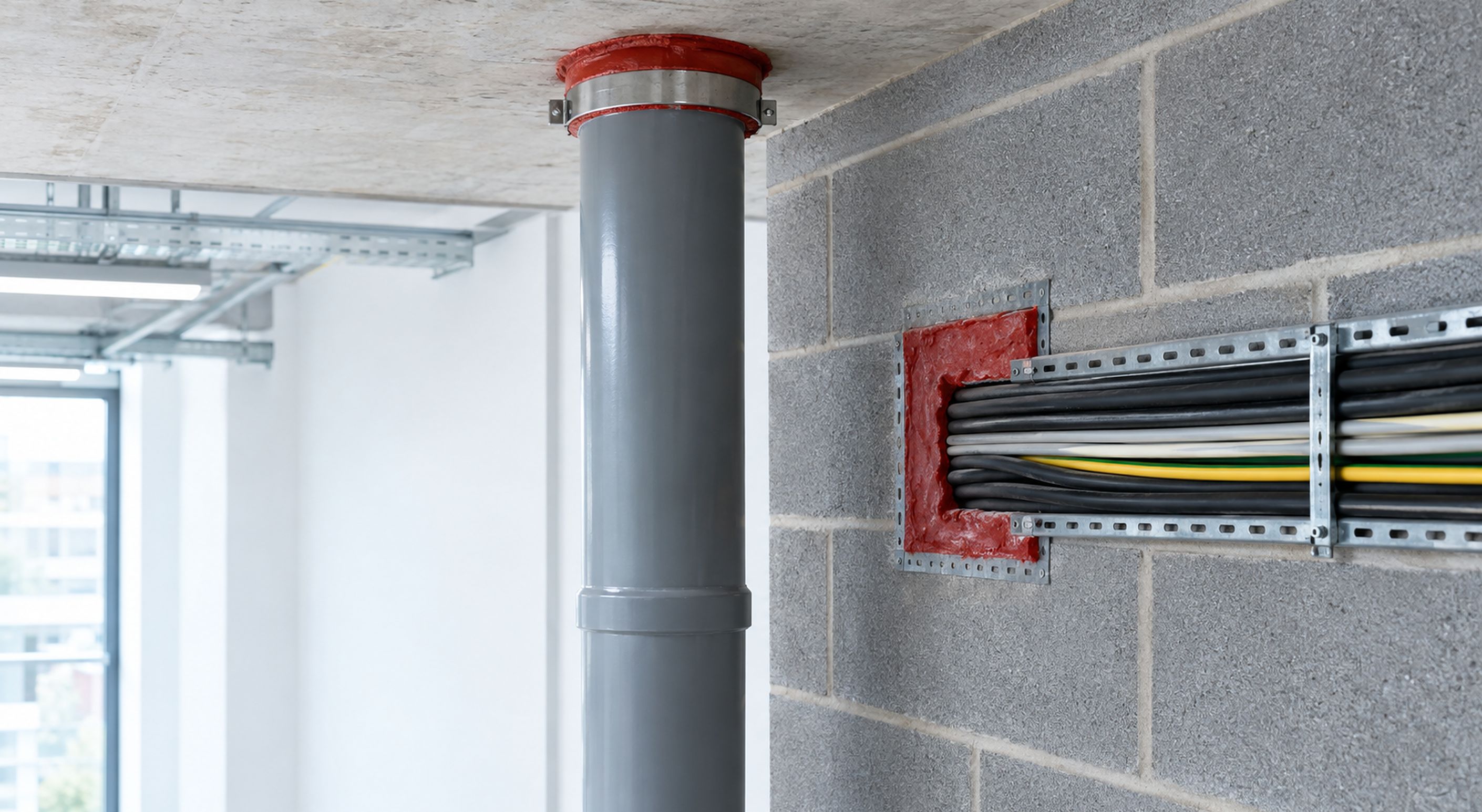
Quick answer: Fire stopping seals the gaps where cables, pipes and ducts pass through fire-rated walls and floors, so fire and smoke can't spread through them. It keeps a building's fire compartments working as designed.
How fire compartments work
Commercial buildings are divided into fire compartments using fire-rated walls and floors. The idea is simple: if a fire starts, it's held in one area for long enough for people to get out and for the fire service to respond.
Where the gaps come from
Every service that passes through a compartment wall or floor makes a hole: cables, containment, pipes, ducts. If those holes aren't sealed properly, fire and smoke can move straight through them.
What fire stopping involves
- Sealing gaps around services with tested fire-rated products.
- Choosing the right product for each type of service and wall or floor.
- Installing it the way the manufacturer's tested details require.
- Recording what was done and where.
Who's responsible
In most non-domestic buildings, the responsible person has a duty under fire safety law to make sure fire safety measures are maintained. Fire stopping is part of that, and it's often picked up in fire risk assessments.
When to check it
Any time new services are installed through fire-rated walls or floors, fire stopping should be part of the job. It's also worth checking after refurbishments, when services are often added or moved.
Need a hand?
EMS is a NAPIT registered commercial contractor working across London and the UK. Get a free quote and we'll come back to you quickly.
Related service: Fire & Safety