
Suspended ceilings vs plasterboard ceilings: which suits your space?
The differences between suspended and plasterboard ceilings, and how to choose the right one for a commercial space.
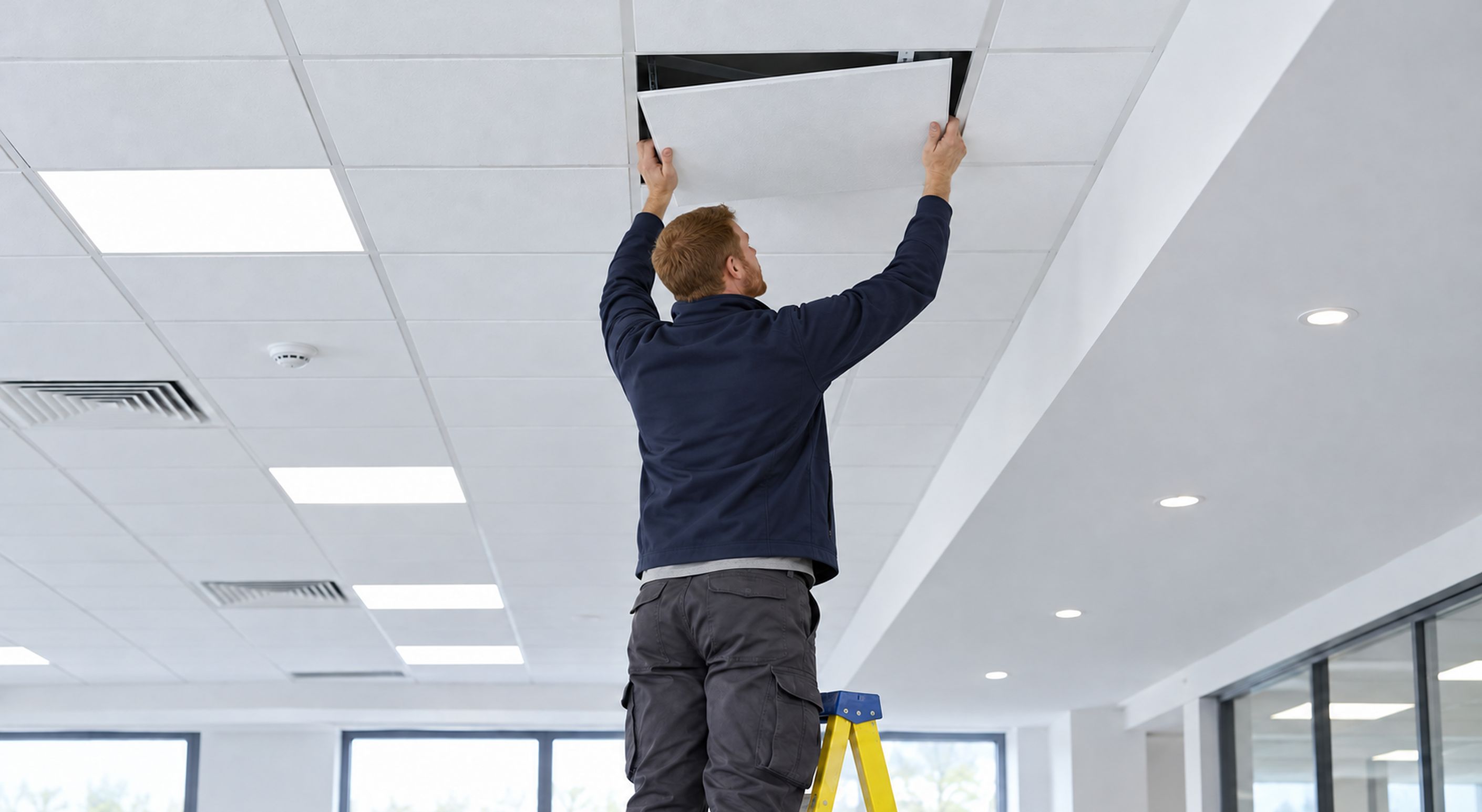
Quick answer: Suspended ceilings give easy access to services above and are quick to install. Plasterboard ceilings give a smooth, seamless finish. Many commercial spaces use a mix of both.
Suspended ceilings
A suspended ceiling hangs a metal grid below the structure and fills it with ceiling tiles. It's the most common choice in offices and commercial buildings.
- Tiles lift out, so lighting, cabling and ductwork are easy to reach.
- Quick to install and to repair.
- Wide choice of tiles, including acoustic options.
- Lighting and grilles fit neatly into the grid.
Plasterboard ceilings
Plasterboard ceilings are fixed to a framework and finished smooth. They suit reception areas, meeting rooms and anywhere the look matters most.
- A clean, seamless finish.
- Can be shaped into bulkheads, rafts and features.
- Can be specified for fire resistance or acoustic performance.
- Access panels are needed where services must be reached.
Choosing between them
Think about how often you'll need access above the ceiling, the look you want and your budget. Many fit-outs use suspended ceilings in working areas and plasterboard in front of house spaces.
Plan it with the electrics
Whichever you choose, planning the ceiling and lighting together saves time and avoids patching later.
Need a hand?
EMS is a NAPIT registered commercial contractor working across London and the UK. Get a free quote and we'll come back to you quickly.
Related service: Ceilings & Partitioning